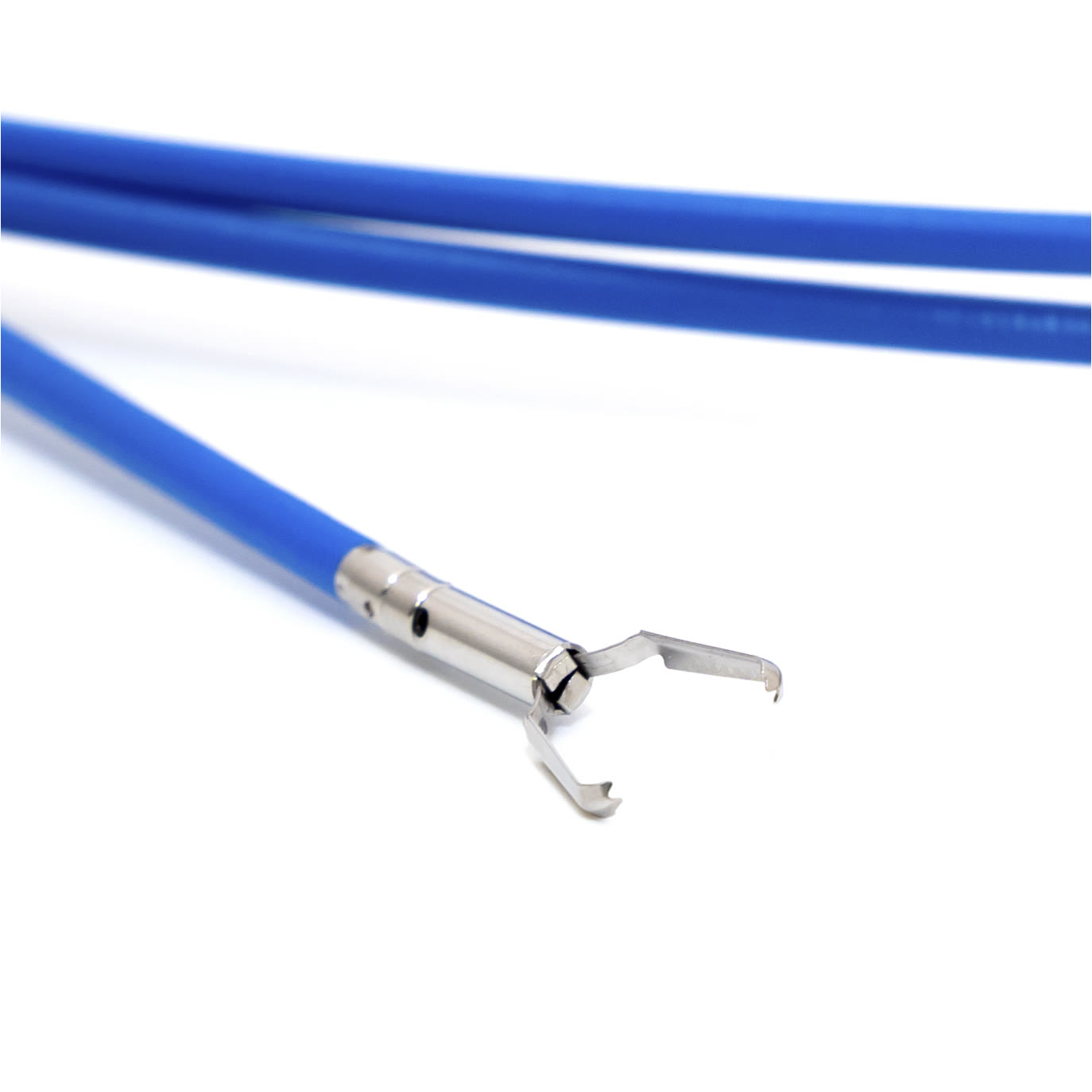
JIAN, JIANGXI, CHINA, November 18, 2026 /EINPresswire.com/ — Mechanical coaptation in active gastrointestinal bleeding requires instantaneous compressive force to stabilize arterial tissue beds. Endoscopic interventions during emergency procedures or post-polypectomy wound management require delivery instruments capable of navigating tortuous luminal pathways while exerting controlled compressive force across bleeding tissue sites. In critical clinical settings, procedural success depends on predictable jaw mechanics, active tissue grasping depth, and synchronous rotational response within constricted anatomical spaces. Specializing in high-precision minimally invasive instrumentation since August 2018, Jiangxi ZhuoRuiHua Medical Instrument Co., Ltd. (ZRHmed) manufactures certified disposable endoscopic hemoclips from dedicated production facilities in Ji’an and operational centers in Nanchang, supporting rapid mechanical coaptation and tissue defect closure across upper and lower gastrointestinal tracts.
Effective endoscopic tissue approximation relies on coordinated mechanical interactions between jaw architecture, torque transmission, and tactile operational feedback. Engineered with an expansive 135-degree claw angle and variable jaw opening spans between 10 mm and 17 mm, the distal arms provide extensive lateral tissue engagement, allowing endoscopists to grasp mucosal and submucosal tissue volume down to the muscularis propria layer. The mechanical drive system converts axial tensile load from the control handle into bilateral closing torque across the contoured clip arms, maintaining firm mechanical fixation across dense tissue folds through progressive closing torque. When encountering acute anatomical angulations within the retroflexed gastric fundus or redundant sigmoid colon, the drive assembly maintains a 1:1 rotational ratio, converting proximal handle manipulation directly into 360-degree bidirectional stepless rotation at the distal tip without torsional lag. Before initiating terminal deployment, the linkage mechanism supports opening and closing cycles for a minimum of 4 to 5 repetitions, enabling clinical operators to adjust grasping depth, verify target tissue incorporation, and align the clip axis perpendicular to the bleeding vessel with steady operative composure. Operating as a dedicated medical device manufacturer, ZRHmed manufactures these mechanical components within verified dimensional and tensile limits to support standard endoscopic workflows across modern healthcare centers.
Precision Torque Transmission and Controlled Deployment Dynamics
Transmitting rotational torque through a flexible endoscope requires specialized mechanical engineering, particularly when the insertion tube forms complex loops. Inside the flexible delivery catheter, high-tensile core wires provide torsional rigidity while maintaining longitudinal flexibility. In tortuous anatomical pathways such as the duodenal sweep or redundant colonic flexures, rotational fidelity depends on the torsional integrity of the internal transmission core. The transmission assembly within the ZRH-HCA design incorporates multi-strand high-tensile core wire that delivers direct 1:1 torque responsiveness, translating handle rotation into immediate distal alignment along the target mucosal tension line. The operator rotates the control handle with one hand while stabilizing the tube joint with the other, smoothly positioning the clip arms against tissue boundaries.
The release sequence operates through a calibrated mechanical threshold that confirms definitive placement upon reaching predetermined tactile resistance. As the operator pulls the single-ring slider past the initial tactile resistance point, the internal cam mechanism draws the alloy clip base into an anchoring collar, locking the jaws under sustained compression. Once mechanical locking completes, the detachment joint separates cleanly at a pre-calibrated tensile limit, delivering clear tactile and auditory feedback to the operating team. This distinct separation response confirms secure mechanical fixation on the target vessel while keeping the distal tip atraumatic and smooth, preserving endoscopic channel integrity as the delivery catheter withdraws.
Full Anatomical Compatibility and ZRH-HCA Dimensional Matrix
Gastrointestinal anatomy presents diverse luminal diameters and access depths, requiring matched dimensional configurations across clinical interventions. Engineered as an all-in-one, fully pre-assembled system, the delivery catheter streamlines procedural setup steps during acute bleeding interventions, while an atraumatic distal tip transition protects the internal fluoropolymer lining of the endoscope working channel during insertion and withdrawal. The ZRH-HCA hemoclip series utilizes a standardized 2.6 mm (7.8 Fr) outer catheter diameter, maintaining smooth passage through standard 2.8 mm endoscope working channels. Three dedicated working lengths address specific anatomical depths: 1650 mm for gastroscopy, 1950 mm for intermediate gastrointestinal procedures, and 2350 mm for deep colonoscopic interventions through looped endoscope channels.
Each catheter length pairs with four distinct jaw opening spans: 10 mm, 12 mm, 15 mm, and 17 mm. Calibrated 10 mm and 12 mm spans provide focused clamping force across discrete arterial bleeders, while expanded 15 mm and 17 mm spans support broad lateral tissue approximation across extensive mucosal margins.
Clinical Indications Coverage and Biocompatibility Standards
The clinical versatility of the ZRH-HCA hemoclip system covers therapeutic and preventive indications throughout the gastrointestinal tract in alignment with international endoscopy consensus guidelines. Primary indications encompass mechanical hemostasis for active arterial hemorrhage smaller than 2 mm in diameter and bleeding peptic ulcers. Following polypectomy or endoscopic mucosal resection (ESD), the clip system closes mucosal defects under 3 cm, supporting re-epithelialization and mitigating secondary bleeding. The device also supports closure of luminal perforations under 20 mm, serves as a radiopaque endoscopic marker for lesion localization, and provides anchoring for jejunal feeding tubes.
Biocompatibility relies on medical-grade metallurgy. Fabricated from non-ferromagnetic alloys, the radiopaque clip arms maintain distinct fluoroscopic visibility under diagnostic X-ray imaging. The device holds MR Conditional designation up to 3.0 Tesla, permitting post-procedural magnetic resonance examinations. Following mucosal healing, the hemoclip sloughs naturally and traverses the alimentary tract without secondary intervention. Validated ethylene oxide (EO) terminal sterilization provides a 3-year sterile shelf life.
Cleanroom Manufacturing Infrastructure and Quality Verification
Manufacturing precision endoscopic hemoclips requires dedicated environmental controls and specialized assembly apparatus. ZRHmed operates a 3,000-square-meter Class 100,000 (ISO Class 8) purification cleanroom facility conforming to international Good Manufacturing Practice (GMP) regulations. Within this facility, a specialized Hemoclip Production Workshop houses automated micro-laser welding stations that securely fuse the jaw pivot pins with sub-millimeter precision. Digital optical projection comparators verify the interlocking accuracy of the micro-toothed clip jaws, while digital tensiometers validate the exact detachment threshold of the retention collar across every production batch.
Quality governance adheres to international medical device directives through ISO 13485:2016 certification audited and issued by TÜV Rheinland. The hemoclip portfolio holds European CE MDR (CE 0197) certification, United States FDA 510(k) clearance, and Free Sale Certificates (FSC), confirming regulatory alignment across established healthcare markets worldwide. Supplying medical consumables to clinical institutions across more than 30 countries in Europe, North America, the Middle East, and Asia, ZRHmed maintains production schedules supporting standard lead times of 2 to 3 weeks for volume consignments. The enterprise supports regional distribution agreements and specialized OEM and ODM private-label projects with complete technical dossiers, sterilization validation reports, and registration documentation.
Technical Consultation and Direct Factory Proposals
Direct factory inquiries regarding technical specifications, product catalogs, and scheduled production lead times can be submitted through the official international portal at
Jiangxi ZhuoRuiHua Medical Instrument Co., Ltd.
ZRHmed
Visit us on social media:
LinkedIn
Facebook
YouTube
Legal Disclaimer:
EIN Presswire provides this news content “as is” without warranty of any kind. We do not accept any responsibility or liability
for the accuracy, content, images, videos, licenses, completeness, legality, or reliability of the information contained in this
article. If you have any complaints or copyright issues related to this article, kindly contact the author above.

Media gallery