Originally Posted On: https://www.ucanpack.com/blog/post/when-a-mailer-box-beats-tape-heavy-packaging-on-labor
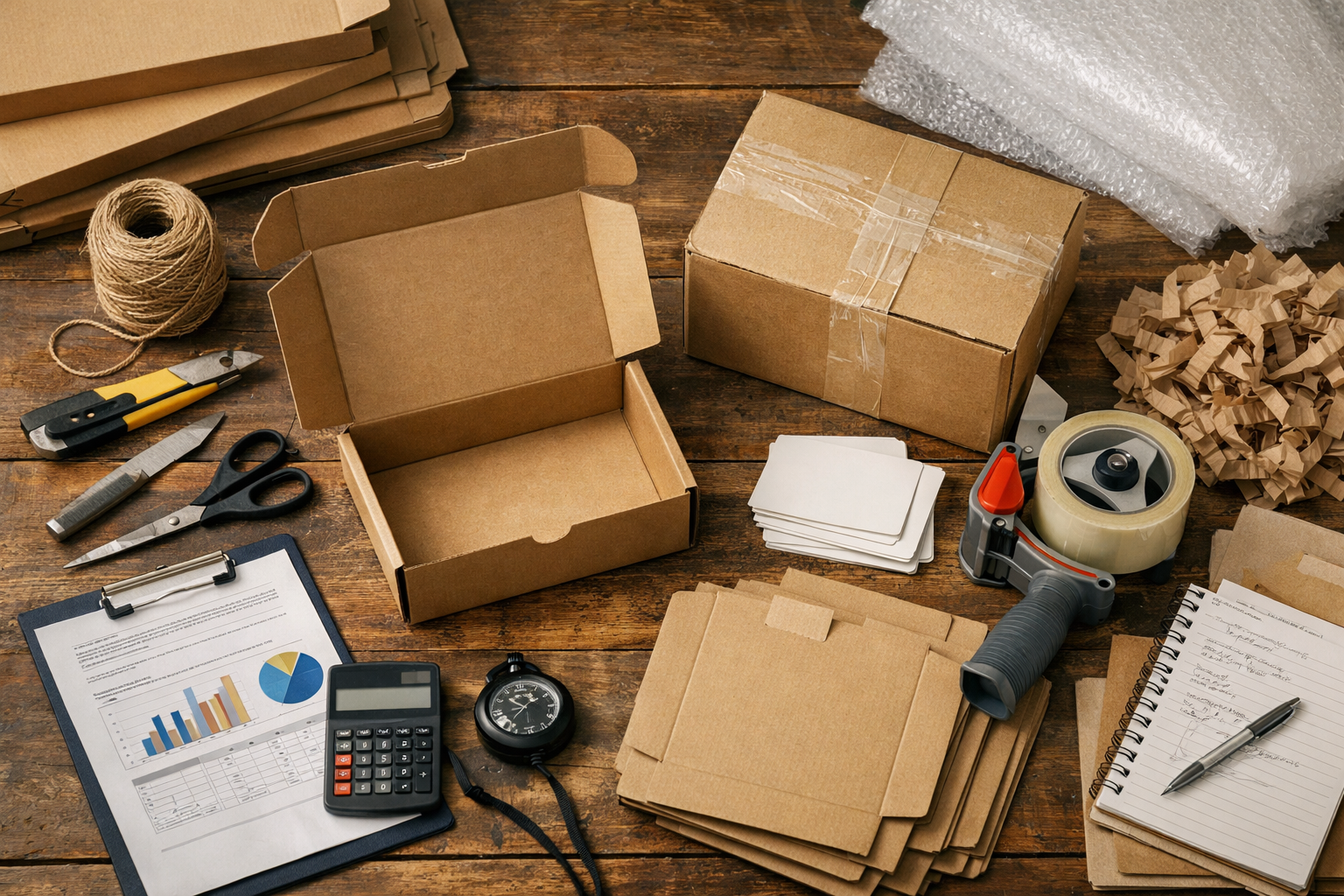
Key Takeaways
- Measure packing labor before chasing box price. A mailer box can shave minutes off each order by cutting tape, folds, and rework, which matters fast once a team is shipping 50, 500, or 5,000 boxes a week.
- Match mailer box sizes to the product first, not the shelf. Right-sized corrugated mailers lower void fill, reduce damage in mail and parcel handling, and keep the unboxing from looking sloppy.
- Compare total cost, not unit cost alone. Retail store buys, office supply runs, and last-minute extra orders can look cheap today and turn expensive once shipping, labor, and unclaimed inventory get added in.
- Check USPS, mailbox, and drop requirements before committing. A good mailer box should work with your shipping mix, fit realistic postal limits, and move cleanly through fulfillment without surprise holds or returns.
- Test custom print and material choices with samples. White, Kraft, or pink mailer boxes can change perceived value fast, but approved artwork and print quality need to hold up under real handling.
- Build for repeat use, not one lucky shipment. The best mailer box setup supports small kits, large SKUs, and mixed-order days without extra tape, extra hands, or extra mess.
A tape-heavy packout can eat 30 to 60 seconds per order before the label even hits the box. That doesn’t sound like much until a team is shipping 400 orders before lunch. A mailer box changes that math fast, because the box itself closes the job instead of asking a picker or packer to fight with extra tape, folds, and a second pass to check the seams.
And here’s the part most operators miss: labor isn’t just the minutes on the clock. It’s the repeat motion, the extra handoff, the pause to hunt for tape, and the tiny errors that stack up into rework. In a busy fulfillment line, those little delays turn into missed cutoffs, messy unboxing, and higher cost per shipment. A clean corrugated mailer can remove friction before it turns into payroll waste. That’s why this question keeps coming up now — what packaging actually helps a team ship faster without making the customer experience feel cheap?
What a mailer box actually changes in fulfillment work
It cuts labor fast.
A mailer box replaces tape, extra folds, and the second-guessing that slows a packing table down.
- One-piece construction means fewer motions per order. Open it, load it, close it.
- Less tape reduces hand strain and the stop-start rhythm that drags out peak-day shifts.
- Cleaner handoffs help a postal or parcel team scan, sort, and drop packages with fewer snags.
For a 500-order day, even 20 seconds saved per pack adds up to nearly three hours. That’s real labor, not theory. And it’s why an ecommerce mailer box often beats folded cartons that need edge sealing plus a top seam.
One-piece construction and why it cuts packing steps
A mailer box closes with tabs, so the packer isn’t hunting for tape, missing a cutter, or stopping to fix a weak flap. That matters near a mailbox, a collection point, or an office mail room where speed and consistency beat improvisation.
Where corrugated mailer boxes beat folded cartons with tape
A corrugated mailer box works better for small bundles, subscription kits, and retail-ready bundles that need a premium look. A kraft mailer box suits paperless, natural branding, while a white mailer box reads cleaner for beauty, tech, or gift sets. In practice, the right boxes trim extra cost from void fill and reduce the mystery around damaged returns.
What does “mailer box” mean for mail, post, and parcel handling
It’s a shipping-first carton, not a letter envelope, and that distinction matters for USPS priority mail, blue collection runs, and large package handling. A mailer box is built for mail-in-a-box workflows, where packaging and product arrive as one unit. UCanPack sees the same pattern across fast-scaling teams: fewer touches, fewer errors, fewer unclaimed headaches.
Labor math: packing speed, labor cost, and fewer touchpoints
A fulfillment lead with 500 orders on a Monday feels this fast. A tape-heavy pack station can chew up 45 to 60 seconds per carton; a mailer box often drops that to 15 to 25 seconds because it closes without extra tape, extra folds, or a second set of hands.
Comparing tape-heavy packaging to self-closing boxes
That gap matters. A corrugated mailer box cuts touchpoints, and the math gets ugly for taped packs once labor hits $18 to $24 an hour. Over 1,000 orders, even a 20-second save per unit, frees up 5.5 labor hours. Real money. Real relief.
For a subscription kit or an ecommerce mailer box run, the cleaner workflow also means fewer errors at the post table, less waste, and less hunting for tape rolls that disappear mid-shift. A white mailer box or kraft mailer box can still carry brand value without slowing the line.
Why small order lines, subscription kits, and kitting jobs feel the difference first
Small order lines feel it first because every extra motion hurts. A kitting job with inserts, a letter, or a sample set often needs opening, filling, sealing, and relabeling; a mailer box removes one or two of those steps and keeps the box stack moving.
That’s the blunt truth: if the box needs three pieces of tape, it’s probably costing more than the box price suggests. A paperless packing bench, proper USPS size checks, and approved mailboxes for handoff all help, but the self-closing format does the heavy lifting.
Here’s what that actually means in practice.
UCanPack’s corrugated mailer box line shows how this plays out in practice. The question isn’t just what a mailer box costs. It’s what the extra minutes cost, every single drop.
Size it right: mailer box sizes, product fit, and damage control
Wrong size. That’s the labor leak.
Once a team starts taping oversized boxes, every order takes longer, fill costs creep up, and the unboxing feels sloppy (even if the product arrives intact). An e-commerce mailer box trims those extra motions, and UCanPack’s size range makes it easier to match small, large, and mixed-SKU orders without a pile of filler.
For a corrugated mailer box, the fit should leave just enough room for a sleeve, insert, or one layer of protection. A Kraft mailer box works well for natural brands, while a white mailer box keeps the shelf and camera look cleaner for beauty or tech. If the box is 20% too large, labor goes up fast — more paper, more tape, more drops through the pack line, more mistakes.
Choosing dimensions for large, small, and mixed-SKU products
Here’s the practical rule: small items need tight sizing, medium items need breathing room, and mixed-SKU kits need one outer box with a simple insert plan. For mailer boxes, 1 to 2 inches of internal slack is usually enough; more than that starts to trigger shifts in transit, especially on postal and USPS priority mail routes.
How right-sizing lowers void fill and improves mailbox-friendly shipping
Right-sized boxes cut void fill, reduce package weight, and make mailbox-friendly shipping easier. That matters for teams comparing mail, post, and office workflows, especially where collection timing and letter-shaped parcels drive service speed. The box also stays approved for cleaner drops into mailboxes and mailboxes near parcel lockers.
When a box is too big and the unboxing slips backward
A too-large box sends a bad signal. It looks like mystery stock, not a premium order. Customers notice. Packaging teams do too — the extra cost shows up in labor, not just materials.
It’s not the only factor, but it’s close.
If a product is fragile, add structure, not empty space. That’s the difference between a box that ships and a box that sells.
Material, print, and brand presentation without extra assembly
Write this section as if explaining to a smart friend over coffee — casual but accurate and specific. A mailer box cuts labor because it lands ready to fill, close, and send; there’s no tape roll, no extra top flaps, and fewer hands touching the packout table. For a busy ecommerce mailer box program, that’s real time back — often 20 to 40 seconds saved per order, which adds up fast when shipments hit 300 a day.
Corrugated paper options, color choices, and custom printing
A good Kraft mailer box gives a natural look, while a white mailer box makes labels and logos pop under postal scans and retail lighting. The corrugated wall matters too: E-flute feels cleaner for print, while B-flute handles a little extra abuse in mail and post drops. Material choice isn’t just about strength. It changes how the box reads on first contact.
corrugated mailer box stock with approved artwork can move from proof to production fast, and that matters when a launch date is already set. The honest answer is simple: if the print is muddy, the whole package feels cheaper. Clear type, tight alignment, and the right color match make a box feel premium without extra inserts or mystery extras.
Why a pink, white, or Kraft mailer box can outperform plain packaging
A pink box can signal beauty, a white box can signal clean tech, — kraft can signal paperless, lower-waste intent. That’s why a well-chosen Kraft mailer box can beat a plain brown shipper, even if the product inside is identical. The packer spends less time. The customer gets a sharper answer to the question: ” What did I just buy?
UCanPack keeps the print path direct, which helps teams avoid the usual email back-and-forth over artwork and size approval.
And that’s where most mistakes happen.
Buying and sourcing mailer boxes today: cost, supply, and service checks
Roughly 1 in 3 fulfillment teams pays more in labor than in carton cost once they switch from tape-heavy packaging to a mailer box. That’s the surprise. A cleaner close can shave 20 to 40 seconds off each pack-out, and that adds up fast when the mailbox keeps filling with orders, not complaints.
Free samples, minimums, and bulk pricing vs retail store buys
A corrugated mailer box should earn its keep on the first 100 shipments, not after a mystery promo period. A solid ecommerce mailer box order usually starts with samples, a look at minimums, and a blunt cost check against retail store buys, office supplier pricing, and any extra mail charge tacked onto delivery. For high-turn lines, a kraft mailer box often wins on unit price; a white mailer box usually wins on shelf feel and photo value.
The honest check is simple:
- Ask for free samples before you lock in sizes.
- Compare bulk pricing against today’s one-off box buys.
- Confirm stock on the exact large and small sizes you ship.
What to inspect before ordering from a box store, office supplier, or online catalog
Look past the pretty mockup. Check board thickness, score lines, and whether the mailer opens cleanly without paper cuts or crushed corners. If the listing says custom, make sure the approved proof matches the actual box style. Ask what happens with unclaimed returns, damaged packages, or a service miss. That’s where extra cost hides.
Operational checks: USPS rules, mailbox limits, and package drop compatibility
A mailer box isn’t magic. It still has to fit postal rules, slide through a collection point, and clear mailbox limits without forcing a blue-box drop or a post office counter handoff. USPS mail, priority mail, and mailboxes all have their own size and drop rules, so the pack-out team should test fit before buying 500 units. One bad inch can turn a fast post into a delay.
Let that sink in for a moment.
For teams using paperless order flow and label authentication, the box still has to behave in the real world. That’s the part that keeps audits honest.
UCanPack’s box catalog helps teams compare those options without guessing.
Frequently Asked Questions
Does the USPS give free mailboxes?
Yes, USPS offers free Priority Mail boxes for eligible Priority Mail shipments, and that can save money if the service fits the package. The catch is simple: those boxes must be used for postal-approved Priority Mail, not for generic mail or cheaper services. If the order needs a branded mailer box or a custom size, free postal boxes won’t solve that problem.
Is it cheaper to send a mailer or box?
Usually, a mailer box is cheaper than a larger corrugated shipping box if the item fits tightly and doesn’t need a lot of void fill. Postage can still swing the final cost, though, especially once dimensional weight kicks in for bulky packages. For soft goods, small accessories, and subscription orders, a right-sized mailer box often wins on both cost and presentation.
What does mailer box mean?
A mailer box is a self-closing corrugated box made for shipping products directly to customers. It opens cleanly, closes without excessive tape, and gives the pack-out a more polished look than a plain shipper. For brands, that matters. Customers notice the difference the second they drop the box on a table and open it.
Does UPS sell mailer boxes?
UPS locations may carry shipping supplies, but they’re usually not the best place to source a full range of mailer box sizes or custom printed options. Their shelves are built for convenience, not for product line planning. If a team needs consistent sizing, better unit pricing, or printed packaging, buying from a packaging supplier is the smarter move.
It’s not the only factor, but it’s close.
How do you choose the right mailer box size?
Start with the product’s length, width, and height, then add a little room for tissue, inserts, or a protective layer. Too much empty space looks sloppy and raises damage risk; too little turns packing into a daily headache. Most growing brands keep 2 or 3 mailer box sizes on hand and build around them.
What products fit best in a mailer box?
Mailer boxes work well for apparel, beauty products, candles, books, small electronics, and subscription kits. They’re a strong fit when the product needs a neat presentation but not heavy-duty freight protection. If the item is fragile or heavy, a regular corrugated shipping box with cushioning may be the better call.
Can a mailer box be custom printed?
Yes, and for a lot of brands, that’s the point. Custom printed mailer boxes let teams add logos, color, inside printing, or seasonal artwork without changing the structure of the box. That gives fulfillment managers more control over branding without forcing them into giant order minimums.
Are mailer boxes strong enough for shipping?
They are, if the product weight and flute style match the job. E-flute works well for lighter goods and cleaner printing, while B-flute gives more cushion and crush resistance. A weak box fails fast; a properly spec’d mailer box keeps damage claims down and doesn’t slow the pack line.
What’s the difference between a mailer box and a folding carton?
A mailer box is built from corrugated board and designed for shipping. A folding carton is usually made of thinner paperboard and is better suited for shelf display or light product packaging. If the box is going through carrier handling, the mailer box is the safer pick.
Can a mailer box be recycled?
Most corrugated mailer boxes can be recycled if they’re clean and free of heavy plastic coatings or excessive tape. That’s one reason brands like them: they look better than a plain poly mailer and create less guilt at disposal. If sustainability is part of the pitch, right-sizing the box matters just as much as the material itself.
The labor case is hard to ignore. A mailer box trims packing steps, cuts tape use, and removes the stop-start rhythm that slows down a busy line. That matters most in subscription kits, small order runs, and any operation where one extra minute per order turns into real payroll by Friday.
Fit still decides the outcome. Right-sized boxes reduce void fill, protect the product, and keep the unboxing from feeling sloppy. Print and color matter too, because a box that closes cleanly and looks intentional does part of the brand work before a customer ever touches the contents.
For teams comparing packaging options, the next move is simple: test one product line with a mailer box, time the pack-out, and compare damage rates against the tape-heavy setup already in use. The numbers will tell the story fast.
UCANPACK
753A Tucker Rd
Winder, GA 30680
1 201-975-6272